
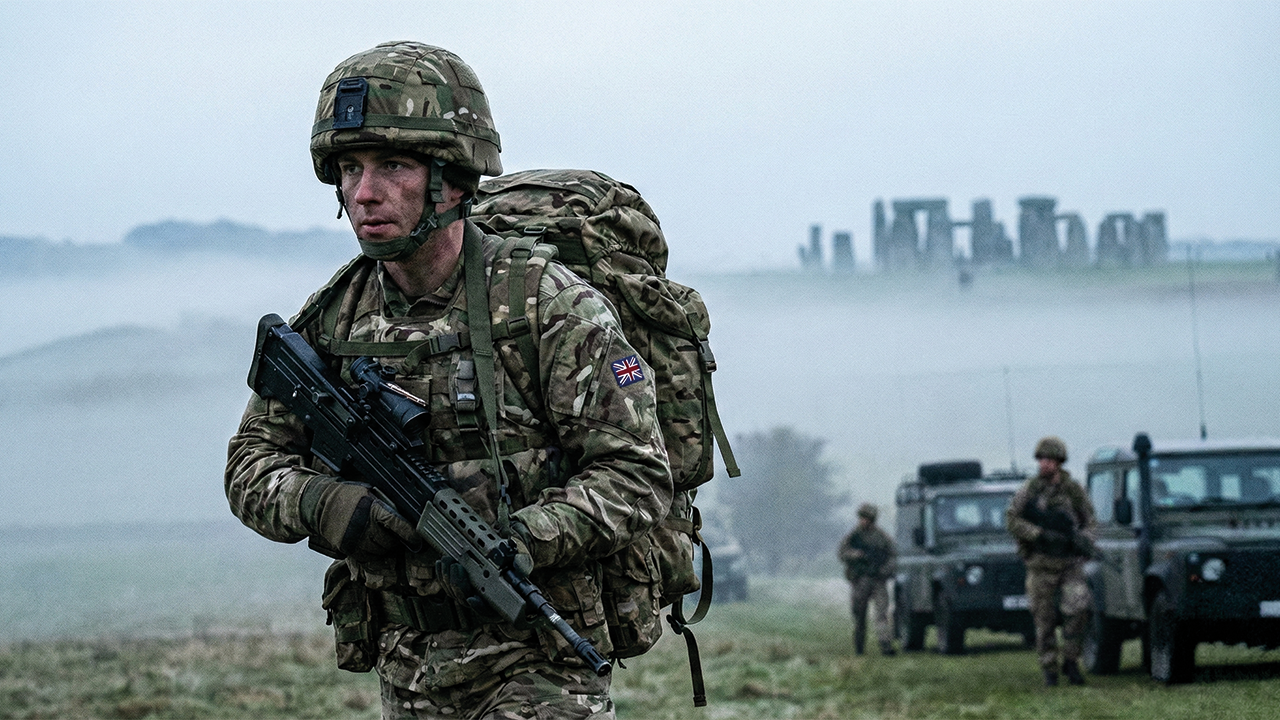
The UK government is launching a new “gap year” programme (a pre-university year off) to address long-term personnel shortages in the armed forces and ongoing challenges in retaining existing staff.
The plan will offer young people who have recently graduated from school or college the opportunity to experience the Army, Navy, or Royal Air Force without committing to a long-term obligation.

Programme Details:
Target Group: Young people under the age of 25.
Capacity: The programme will launch in the spring with 150 participants, with the aim of reaching 1,000 young people per year.
Terms: Participants will receive a salary (the amount has not yet been disclosed) and will not be deployed to active operations or frontline duties.
Content: The Army programme will include 13 weeks of basic training followed by a two-year placement, while the Navy will offer a one-year general seaman training programme.

Defence Secretary stated that the programme will equip young people with “lifelong” skills such as leadership, teamwork, and problem-solving.
The government hopes that the programme will introduce the armed forces to a broader cross-section of society and encourage some participants to pursue a military career.
Political Reactions and Background
The programme is inspired by a similar model used by the for the past decade, under which around half of participants go on to join the military on a permanent basis.
However, Conservative Shadow Defence Secretary criticised the government, arguing that a starting cohort of just 150 participants could “hardly be described as a pilot scheme” and would do little to improve the country’s state of war readiness.
Other European countries, such as and , are also reintroducing similar voluntary national service models in response to the perceived threat from.

Honestly, this feels like the military finally waking up to how the modern job market actually works. For a lot of 18-year-olds, signing a multi-year contract right out of school is terrifying. This scheme is clever because it lowers the stakes—it is essentially a paid internship in uniform. It removes the fear of being trapped.
While the political opposition is right to point out that 150 spots won’t fix the massive recruitment hole overnight, they might be missing the bigger picture. It is about rebranding. If the Armed Forces can show they are flexible enough to offer a “gap year,” they might just shake off their rigid image and appeal to a generation that values diverse experiences over lifelong tenure.